
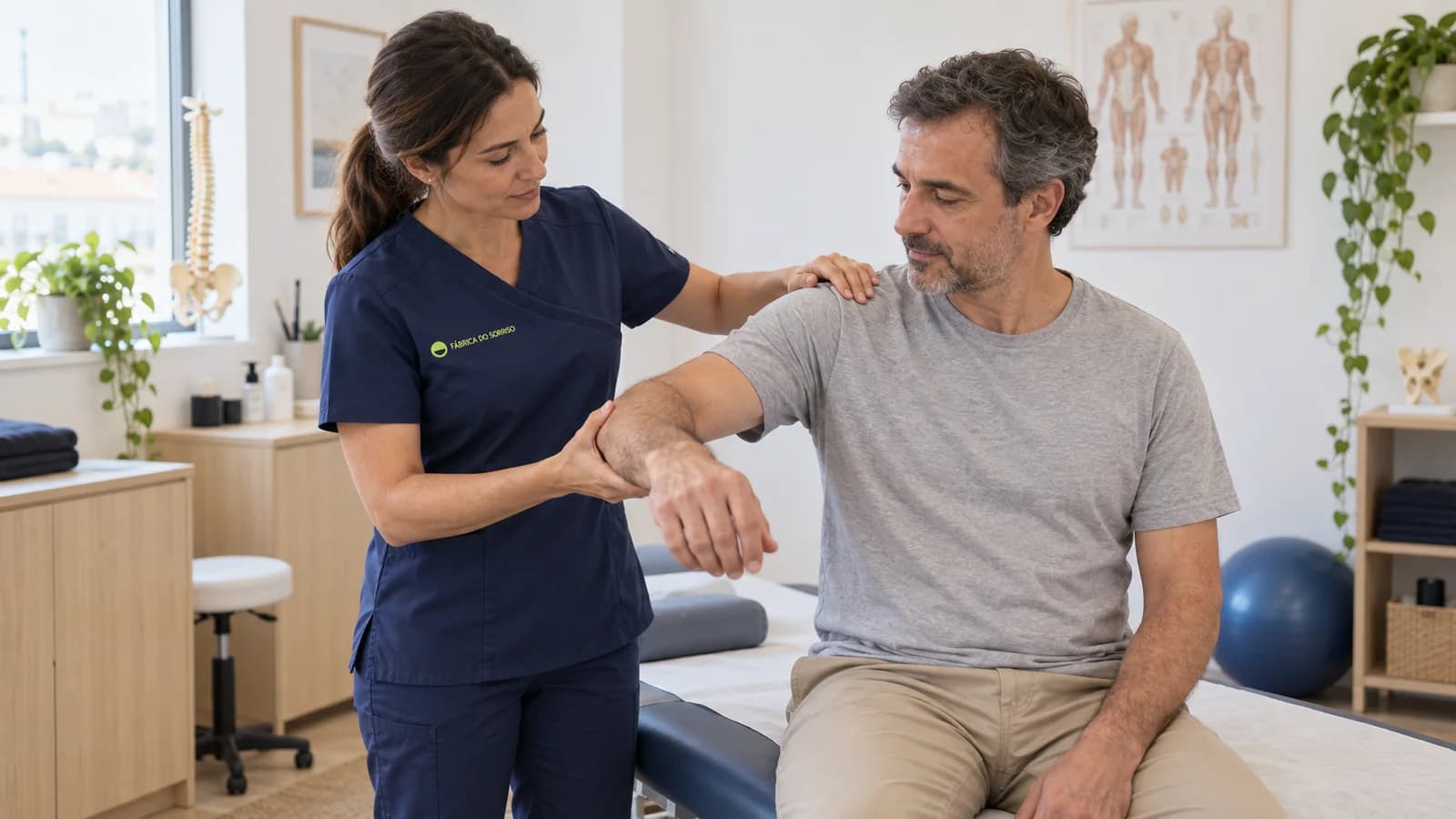
What is osteopathy?
Osteopathy is a manual therapy centred on the neuro-musculoskeletal system: muscles, joints, the spine and the tissues that surround them. The osteopath assesses the body as a whole — posture, mobility, patterns of tension — and uses their hands to diagnose and treat mobility restrictions that cause pain or limit function.
In Portugal, osteopathy is a profession regulated by Law 71/2013, which regulates non-conventional therapies in Portugal: practitioners need a professional licence issued by the Portuguese health authority ACSS in order to practise. It does not replace conventional medicine — it complements it, and a good osteopath knows how to recognise the cases that should be referred to a doctor.
What problems does osteopathy treat?
The complaints that most often bring someone to an osteopath are:
- Lower back pain — lumbar pain, acute or chronic, is the most common reason for an appointment.
- Neck pain and tension in the neck and shoulders — including that associated with desk work and screens.
- Sciatica — pain that radiates from the lower back down the leg.
- Tension headaches — headaches originating in cervical muscle tension.
- Temporomandibular pain — pain in the jaw joint, frequently associated with bruxism.
- After-effects of trauma — sprains, falls, accidents, sports injuries.
- Support during pregnancy — postural adaptations before birth and recovery afterwards.
- Babies and children: complaints should be assessed by the child’s healthcare professional; osteopathy should not be assumed suitable for every symptom.
Osteopathy and jaw pain: what is the link with dentistry?
The TMJ (temporomandibular joint) — the one that connects the jaw to the skull — is a classic meeting point between osteopathy and dentistry. Pain when chewing, clicking, a feeling of the jaw being "stuck", headaches on waking and tooth wear from bruxism are complaints that benefit from a joint approach.
The dentist assesses the occlusion, the wear and whether an occlusal splint (night guard) is needed; the osteopath works on the chewing and neck muscles and the associated patterns of tension. This is precisely the kind of coordination the Fernão Ferro polyclinic makes possible: the osteopathy appointment and the orofacial pain appointment operate under the same roof, with direct communication between professionals.
What happens during an osteopathy appointment?
The first appointment begins with a detailed conversation — your clinical history, current complaints, habits and activity — followed by a physical assessment: posture, joint mobility, palpation of the areas of tension.
The treatment uses manual techniques adapted to your case and your age: joint mobilisations, soft tissue techniques, assisted stretching. Contrary to the stereotype, modern osteopathy is not just about "cracking backs" — many techniques are slow and gentle, and nothing is done without your agreement. At the end, you receive practical guidance: exercises, postural corrections and, when indicated, a referral to another speciality.
Is osteopathy safe? Who is it suitable for?
The initial assessment establishes whether manual treatment is appropriate and what precautions are needed. Tell the practitioner about illnesses, medication, pregnancy, operations and previous tests. Professional registration does not replace this assessment or guarantee an outcome.
Just as important as knowing how to treat is knowing when not to treat: fever, recent serious trauma, neurological signs or pain that does not subside are situations that call for medical assessment first. At the polyclinic, that triage comes naturally — the professionals work side by side and refer to one another whenever necessary.
Where can I find osteopathy on the south bank of the Tagus (Margem Sul)?
Appointments take place at the Fernão Ferro polyclinic, Rua Fernando Pessoa, 231 A, on dedicated clinic days. Reception confirms the osteopath’s next availability when you book.
The location serves the whole area of Fernão Ferro, Seixal, Corroios, Sesimbra, Quinta do Conde and surroundings — and, being a polyclinic, it allows you to combine osteopathy with dentistry, psychology, speech therapy and Chinese medicine appointments in the same place.
The most common questions
- Is osteopathy recognised in Portugal?
- Yes. Osteopathy is one of the non-conventional therapies regulated by Law 71/2013, and osteopaths need a professional licence issued by the Portuguese health authority ACSS in order to practise. At Fábrica do Sorriso, appointments take place at the Fernão Ferro polyclinic, licensed by ERS.
- How many osteopathy sessions are needed?
- It depends on the complaint and how long it has existed. Acute problems can improve significantly in a few sessions; chronic or postural conditions usually call for a longer plan, with sessions spaced out. At the end of the first appointment you receive an honest estimate for your case.
- Does osteopathy help with bruxism and jaw pain?
- It can help, as part of a joint approach: the osteopath works on the chewing and neck muscles and the patterns of tension, while the dentist assesses the occlusion and whether an occlusal splint (night guard) may be needed. At the Fernão Ferro polyclinic, the two appointments are coordinated directly.
- Can pregnant women and babies have osteopathy?
- Suitability is assessed individually. During pregnancy, tell the practitioner about obstetric care and any known risks. For babies and children, first seek advice from their healthcare professional to establish the cause of symptoms and appropriate care.
- Do I need a medical referral to book osteopathy?
- No — you can book directly. If there are signs that call for medical assessment first (fever, recent serious trauma, neurological symptoms), the osteopath identifies them at the first appointment and refers you to the right speciality, within or outside the polyclinic.

Author: Fábrica do Sorriso Team
Last updated October 7, 2026. This article is for information only and does not replace an appointment.