
Osteopathy
Manual therapy for the diagnosis, treatment and prevention of neuro-musculoskeletal disorders, at any age.
Osteopathy in Fernão Ferro.
Meet the professionals who provide this treatmentIn short
Osteopathy is a regulated complementary therapy in Portugal (Law 71/2013) that uses manual techniques to treat and prevent dysfunctions of the neuro-musculoskeletal system. After a careful history and a postural assessment, the osteopath works on joints, muscles, fascia and visceral tissue to restore mobility, relieve pain and improve function. We see patients with low back pain, neck pain, sciatica, tension headaches, post-trauma sequelae, TMJ pain and digestive discomfort, women during pregnancy and the post-partum period, athletes, and infants/children for colic, reflux or positional plagiocephaly.
What it is indicated for
Osteopathy mainly addresses the neuro-musculoskeletal system, while looking at the body as a whole.
Low back pain and sciatica
Acute, chronic or radiating low back pain. Post-surgical or postural in origin.
Neck pain and headaches
Neck pain, tension headaches and migraines with a cervical component.
TMJ dysfunction
TMJ pain, teeth grinding, clicks or locking — coordinated with our Dental Sleep Medicine team.
Pregnancy and post-partum
Care for pregnant women with low back or pelvic pain, and post-partum recovery.
Babies and children
Infant colic, reflux, latching difficulty, positional plagiocephaly. Very gentle techniques.
Sports injuries
Tendinopathies, joint pain, sprain recovery and injury prevention in athletes.
How the first session works
The first session lasts about 60 minutes and includes both assessment and manual treatment.
Step 01
History and tests
We discuss the complaint, your clinical history, and review any imaging you bring (X-rays, MRI, ultrasound).
Step 02
Postural and functional assessment
We observe posture, mobility and specific tests to identify the cause of the discomfort.
Step 03
Manual treatment
We apply techniques tailored to your case — articular, muscular, fascial or visceral — always safe and adapted.
How we work
Osteopathy integrates several families of techniques. We always choose those most suited to your case.
Structural techniques
Joint mobilizations and gentle manipulations to restore range of motion.
Myofascial techniques
Work on muscle and fascia to release tension and long-standing compensation patterns.
Visceral approach
Soft techniques on the fasciae of internal organs, useful in functional digestive complaints and after surgery.
Paediatric osteopathy
Extremely light techniques (sustained holds, gentle mobilizations) specific to infants and children.
When it makes sense to book
You may be a candidate if
- You have acute or chronic musculoskeletal pain
- You feel loss of mobility or joint stiffness
- You have tension headaches or cervicogenic dizziness
- You are pregnant or in post-partum with low back/pelvic pain
- You play sport and want recovery or injury prevention
Prior medical assessment is needed if
- There are progressive neurological symptoms (loss of strength, loss of sensation)
- Suspicion of fracture, infection or acute inflammatory process
- High-risk pregnancy — we always discuss with the obstetrician before any technique
In Osteopathy we treat people, not labels. The same low-back complaint can have ten different causes in ten different patients — careful assessment and manual work tailored to each person are what makes the difference. We coordinate with your physician whenever needed and know when to refer — your safety always comes first.
Osteopathy Team
Fábrica do Sorriso · Fernão Ferro
Clear prices, before we start
Before any treatment, you receive a plan explained in detail and a written quote. The amount you approve with us is the amount you pay — no surprises on the invoice, and no pressure to decide.
A written quote
Handed over and explained at your first appointment, before any decision. Take it home and think it over.
Consultation prices
The first visit, the urgent consultation, GBT oral hygiene, the dental sleep medicine and orofacial pain (TMJ) consultations, the polyclinic consultations and the panoramic X-ray have a published price — private prices; with insurance or an agreement, the amount depends on your plan.
See consultation prices3 to 12 interest-free instalments
Finance treatments up to €2,500 with Cofidis Pay — approval in minutes, fully digital.
See financingAgreements, insurance and cheque-dentista
Thirteen agreements and insurers — from Medicare and Multicare to Future Healthcare — plus the SNS cheque-dentista.
See agreements & insurance
No treatment goes ahead without a quote you have approved.
At the assessment you get the plan in writing, with the cost of each stage and what your insurance or agreement covers. Take it home and decide without pressure.
Book a visitWe publish consultation prices. The rest depends on the case — so treatment is quoted in writing, and you know the total before anything starts.
 02 Who treats you
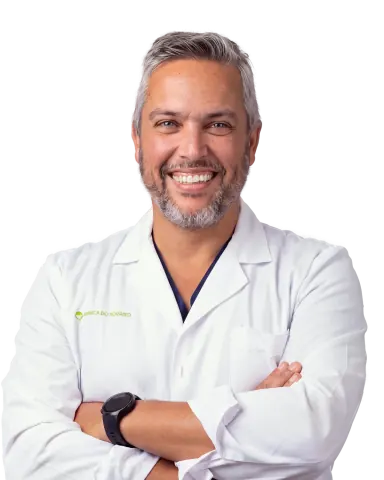
Dr. Pedro Monteiro
Osteopathy
At your appointment, Dr. Pedro Monteiro will listen to what brings you in, assess your case and explain your options. You can ask questions before deciding what to do next.
- Registration
- ACSS 0031327
- Clinics
- Fernão Ferro

Available at
Fernão Ferro
Rua Fernando Pessoa, 231 A
2865-189 Fernão FerroBook a visit+351 961 587 068Call charged at national mobile rate
+351 212 121 196Call charged at national landline rate
Frequently asked questions
- What is Osteopathy and how does it work?
- Osteopathy is a manual therapy that views the body as a whole. The osteopath assesses posture, joint mobility, muscle and fascial tension, and the relationship with internal organs, then uses manual techniques (mobilization, gentle manipulation, myofascial and visceral techniques) to restore mobility and relieve pain. In Portugal it is a regulated profession — only osteopaths with a professional license issued by ACSS may practise.
- What conditions is it most indicated for?
- Osteopathy is most indicated for neuro-musculoskeletal complaints: low back, neck and mid-back pain, sciatica, disc herniations, tension headaches, cervicogenic dizziness, TMJ pain, post-traumatic pain, joint pain (shoulder, knee, hip), tendinopathies and overuse syndromes. It is also useful for functional digestive discomfort, in women during pregnancy and the post-partum period, and in infants (colic, reflux, plagiocephaly).
- Does Osteopathy replace seeing a doctor?
- No. Osteopathy complements conventional medicine. Whenever appropriate, we coordinate with your GP, physiatrist, orthopaedic surgeon or other specialists. In "red flag" situations (progressive neurological symptoms, loss of strength, suspected fracture, infection, high-risk pregnancy, etc.) we refer for medical evaluation before any manual treatment.
- How many sessions are usually needed?
- For a recent acute complaint, 2 to 4 sessions are often enough. For chronic conditions, we space out the sessions and combine them with home exercises. For maintenance, many patients choose one session every 2–3 months. The plan is always reviewed with you after the assessment.
- Is it suitable for pregnant women and babies?
- Yes, with adapted techniques. With pregnant women, techniques are gentle and focused on relieving low back pain, pelvic pain and postural discomfort. With babies, we use very light techniques (sustained holds, gentle mobilizations) that help with colic, latching difficulties or positional plagiocephaly. Safety for both baby and mother is carefully evaluated at each session.
- How should I prepare for the session?
- Bring reports, imaging (X-rays, MRI, ultrasound) and your current medication list. Wear comfortable clothing that allows movement. If the complaint is recent, avoid painkillers for a few hours beforehand so we can assess the pain accurately (whenever that is safe for you).
Other treatments
Ready to move better?
Book your Osteopathy session at our Polyclinic in Fernão Ferro. We see adults, pregnant women, athletes and infants.