
Oral Surgery
Wisdom teeth, extractions and minor oral surgery, each step explained before it starts.
Oral Surgery in Almada, Fernão Ferro, Baixa da Banheira.
Meet the professionals who provide this treatmentIn short
Oral surgery encompasses various surgical procedures performed in the oral cavity by a specialized team. It includes simple and complex extractions, removal of impacted wisdom teeth (third molars), apicoectomies to treat root infections, bone grafts for implant preparation, frenectomies, and pre-prosthetic surgeries. We use minimally invasive techniques, 3D imaging technology for precise planning, and offer various sedation options - from local anesthesia to intravenous sedation - to ensure safe procedures with shorter recovery times and maximum comfort. Our team has advanced life support training and follows strict safety protocols.
Minimally Invasive Surgery
We use current technology for more precise, safer, and comfortable surgical procedures with faster recovery.
3D CBCT Imaging
Precise surgical planning with cone beam computed tomography for complete three-dimensional visualization
Guided Surgery
Digitally created custom surgical guides for millimeter-precise implant placement
Piezoelectric Surgery
Ultrasonic bone cutting that preserves soft tissues and reduces post-operative trauma, swelling, and pain
PRF/PRP Therapy
Platelet concentrates from your own blood naturally accelerate healing and bone regeneration
What to Expect During Recovery
Everyone recovers differently, but this is a typical timeline for most oral surgeries.
Day 1
Surgery Day
- Rest with head elevated
- Apply ice (20 min on, 20 min off)
- Take prescribed medication
- Cold and liquid foods only
Days 2-3
Peak Swelling
- Swelling peaks, this is normal
- Continue applying ice if needed
- Begin gentle salt water rinses
Days 4-7
Gradual Improvement
- Swelling starts to decrease
- Can resume light activities
- Gradually introduce solid foods
Week 2+
Full Recovery
- Most normal activities resumed
- Soft tissues nearly healed
- Follow-up appointment to check healing
Tips for a Quick Recovery
Follow these guidelines to ensure a smooth and effective recovery.
Do
- Rest for the first 24-48 hours
- Apply ice to reduce swelling
- Eat soft and cold foods
- Take medication as prescribed
- Sleep with head elevated
- Stay hydrated
Don't
- Do not smoke for at least 72 hours
- Do not use straws (dry socket risk)
- Do not rinse vigorously
- Avoid hot or spicy foods
- No intense exercise for 1 week
- Do not touch the wound
What to Expect
Our comprehensive evaluation ensures you receive the most appropriate treatment plan for your specific needs.
Step 01
Complete Clinical Exam
Detailed assessment of oral health, medical history, and treatment goals
Step 02
3D Imaging
CBCT scan for precise visualization of bone anatomy and adjacent structures
Step 03
Personalized Treatment Plan
Detailed presentation of surgical options, timelines, and costs involved
Step 04
Surgery Scheduling
Convenient appointment booking and complete pre-operative instructions for optimal preparation
Why does this matter?
Untreated oral problems can have serious consequences for your overall health and quality of life.
Serious Infections
Impacted teeth or untreated oral lesions can lead to infections that spread to other areas of the face and neck
Progressive Bone Loss
Missing teeth or severe periodontal disease cause bone deterioration that can affect facial structure
Impact on Quality of Life
Chronic pain, difficulty chewing, and aesthetic problems significantly affect daily well-being
Compromised Immune Response
Chronic oral infections strain your immune system, making you more susceptible to other health conditions
Systemic Health Risks
Untreated oral infections have been linked to cardiovascular disease, diabetes complications, and respiratory problems
More Complex Treatment Later
Delaying necessary surgery often leads to more extensive procedures, longer recovery times, and higher costs
Is Oral Surgery Right for You?
This is for you if...
- You have impacted or problematic wisdom teeth causing pain or infections
- You need dental implants to replace missing teeth
- You have bone loss requiring grafting before implants
- You have cysts, benign tumors, or oral lesions requiring removal
- You have good overall health and are committed to post-operative care
May not be ideal if...
- You have uncontrolled medical conditions that increase surgical risks
- You smoke heavily and are unwilling to stop temporarily
- You have unrealistic expectations about results or recovery
Clear prices, before we start
Before any treatment, you receive a plan explained in detail and a written quote. The amount you approve with us is the amount you pay — no surprises on the invoice, and no pressure to decide.
A written quote
Handed over and explained at your first appointment, before any decision. Take it home and think it over.
Consultation prices
The first visit, the urgent consultation, GBT oral hygiene, the dental sleep medicine and orofacial pain (TMJ) consultations, the polyclinic consultations and the panoramic X-ray have a published price — private prices; with insurance or an agreement, the amount depends on your plan.
See consultation prices3 to 12 interest-free instalments
Finance treatments up to €2,500 with Cofidis Pay — approval in minutes, fully digital.
See financingAgreements, insurance and cheque-dentista
Thirteen agreements and insurers — from Medicare and Multicare to Future Healthcare — plus the SNS cheque-dentista.
See agreements & insurance
No treatment goes ahead without a quote you have approved.
At the assessment you get the plan in writing, with the cost of each stage and what your insurance or agreement covers. Take it home and decide without pressure.
Book a visitWe publish consultation prices. The rest depends on the case — so treatment is quoted in writing, and you know the total before anything starts.
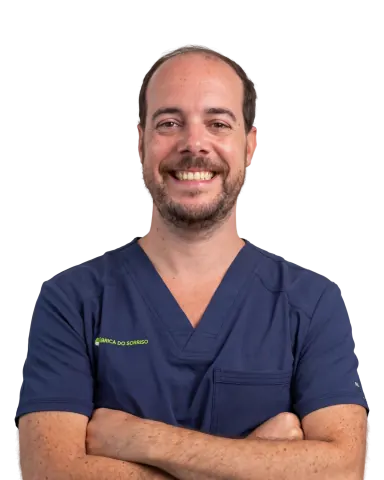 02 Who treats you
Dr. Duarte Tomé
Dentist
At your appointment, Dr. Duarte Tomé will listen to what brings you in, assess your case and explain your options. You can ask questions before deciding what to do next.
- Registration
- OMD 6379
- Clinics
- Almada
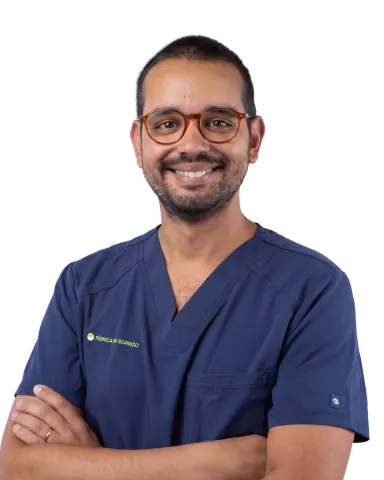
Dr. João Oliveira
Dentist
At your appointment, Dr. João Oliveira will listen to what brings you in, assess your case and explain your options. You can ask questions before deciding what to do next.
- Registration
- OMD 10277
- Clinics
- Almada · Fernão Ferro
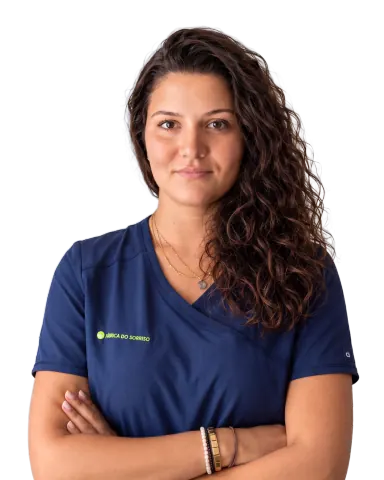
Dr. Ana Rita Pinho
Dentist
At your appointment, Dr. Ana Rita Pinho will listen to what brings you in, assess your case and explain your options. You can ask questions before deciding what to do next.
- Registration
- OMD 10342
- Clinics
- Fernão Ferro

Dr. Margarida Carvalho
Dentist
At your appointment, Dr. Margarida Carvalho will listen to what brings you in, assess your case and explain your options. You can ask questions before deciding what to do next.
- Registration
- OMD 10306
- Clinics
- Almada

Dr. Filipa Caeiro
Dentist
At your appointment, Dr. Filipa Caeiro will listen to what brings you in, assess your case and explain your options. You can ask questions before deciding what to do next.
- Registration
- OMD 7931
- Clinics
- Fernão Ferro · Baixa da Banheira


Available at
Almada
Rua da Liberdade, 74 J
2805-355 AlmadaBook a visit+351 968 649 899Call charged at national mobile rate
+351 212 741 724Call charged at national landline rate
Fernão Ferro
Rua Fernando Pessoa, 231 A
2865-189 Fernão FerroBook a visit+351 961 587 068Call charged at national mobile rate
+351 212 121 196Call charged at national landline rate
Baixa da Banheira
Rua Ville Plaisir, 76 B
2835-166 Baixa da BanheiraBook a visit+351 937 616 715Call charged at national mobile rate
+351 214 088 669Call charged at national landline rate
Frequently asked questions
- When is it necessary to extract wisdom teeth?
- Wisdom teeth extraction is recommended when they are impacted (cannot erupt properly), cause pain or recurrent infections, press against adjacent teeth causing crowding, have extensive cavities or periodontal disease, or form cysts. Evaluation with panoramic X-ray or CT scan helps determine the need and complexity of extraction. Ideally, evaluation should be done between ages 16-25.
- Does oral surgery hurt?
- During surgery, you will not feel pain thanks to local anesthesia or sedation. We use modern anesthesia techniques that ensure total comfort during the procedure. After surgery, some discomfort is normal and is well controlled with prescribed pain medication. Most patients describe the post-operative period as more comfortable than expected. We offer various sedation options for more anxious patients.
- What types of anesthesia are available for oral surgery?
- We offer several options: Local anesthesia - numbs only the treated area, patient stays awake; Conscious sedation with nitrous oxide (laughing gas) - relaxes the patient while keeping them conscious; Oral sedation - medication taken before the procedure to reduce anxiety; Intravenous (IV) sedation - deeper sedation, ideal for longer procedures or very anxious patients. The choice depends on the procedure and your preferences.
- How long does recovery take after wisdom tooth extraction?
- Initial recovery takes about 3-5 days, during which there may be swelling and moderate discomfort. Swelling peaks 2-3 days after surgery and then decreases. Most people return to normal activities after one week. Complete healing of soft tissues takes 2-3 weeks, and bone healing takes several months. Following post-operative instructions is essential for quick recovery without complications.
- What is dry socket and how can it be prevented?
- Dry socket occurs when the blood clot that forms after extraction becomes dislodged or dissolves prematurely, exposing bone and nerves. It causes intense pain 3-4 days after surgery. To prevent: do not smoke for at least 72 hours (ideally 1 week); do not use straws; avoid vigorous spitting; do not rinse in the first 24 hours; follow a soft diet. If you suspect dry socket, contact us for treatment that quickly relieves pain.
- What care should I take after oral surgery?
- In the first 24 hours: bite on gauze for 30-45 minutes; apply ice externally (20 min on, 20 min off); rest with head elevated; do not rinse, spit, or use straws; avoid hot foods. In the following days: take prescribed medication; eat soft and cold foods; after 24h, gently rinse with warm salt water; avoid intense physical exercise for 3-5 days; do not smoke. Contact us if you have fever, severe pain not controlled with medication, or excessive bleeding.
- What can I eat after oral surgery?
- In the first 24-48 hours, choose cold and liquid/soft foods: ice cream, yogurt, smoothies, cold soups, mashed potatoes. Avoid hot, spicy, acidic, hard, or crunchy foods. Gradually introduce more solid foods as comfort allows. Avoid foods with small seeds (strawberry, kiwi) that can lodge in the wound. Stay hydrated but do not use straws. Foods rich in vitamins A and C (eggs, fish, sweet potato) help with healing.
- What is an apicoectomy?
- An apicoectomy is an endodontic surgery performed when conventional root canal treatment cannot eliminate an infection at the tooth root. The procedure surgically removes the root tip (apex) and infected tissue around it, then seals the canal. We apply PRF (Platelet-Rich Fibrin) at the surgical site to accelerate bone regeneration and healing. It is an alternative to tooth extraction, allowing the tooth to remain functional. Recovery is usually quick, with most patients returning to normal activities the next day.
- What is a bone graft and when is it needed?
- A bone graft is a procedure that adds bone volume where there is loss or insufficiency. It is mainly needed before dental implants when there is not enough bone to anchor them, after extractions to preserve the socket, in cases of bone loss from periodontal disease, or for reconstruction after trauma. Bone can come from various sources: from the patient, bone bank, or synthetic materials. Complete healing can take up to 12 months.
- Is it possible to extract multiple wisdom teeth at once?
- Yes, it is common and even advantageous to extract all four wisdom teeth in a single session. Advantages include: only one recovery period instead of several, lower total cost, a single dose of anesthesia/sedation. However, the decision depends on various factors such as the complexity of each extraction, the patient's overall health, and their preference. Some patients prefer to split into two sessions (upper and lower, or right and left side). We will discuss the best option with you.
- Can I work or go to school after surgery?
- We recommend rest on the day of surgery and at least 24-48 hours after. For simple procedures, many patients resume light activities 1-2 days later. For more complex surgeries (such as extraction of multiple impacted wisdom teeth), you may need 3-5 days of rest. If you receive sedation, you cannot drive or operate machinery for 24 hours. Intense physical work should be avoided for at least one week. We provide a statement to justify absence if needed.
- What is a frenectomy?
- A frenectomy is a minor surgery that removes or modifies the frenum - a thin membrane of tissue in the mouth. The two most common types are: lingual frenum (under the tongue) - when too short, it can cause "tongue tie" affecting speech and breastfeeding; labial frenum (between lips and gums) - can cause a gap between front teeth or gum recession. The procedure is quick (10-15 minutes), can be done with laser or scalpel, and recovery is very fast.
Other treatments
Ready to Restore Your Oral Health?
Book your assessment appointment and discover how oral surgery can solve your dental problems safely and effectively.