
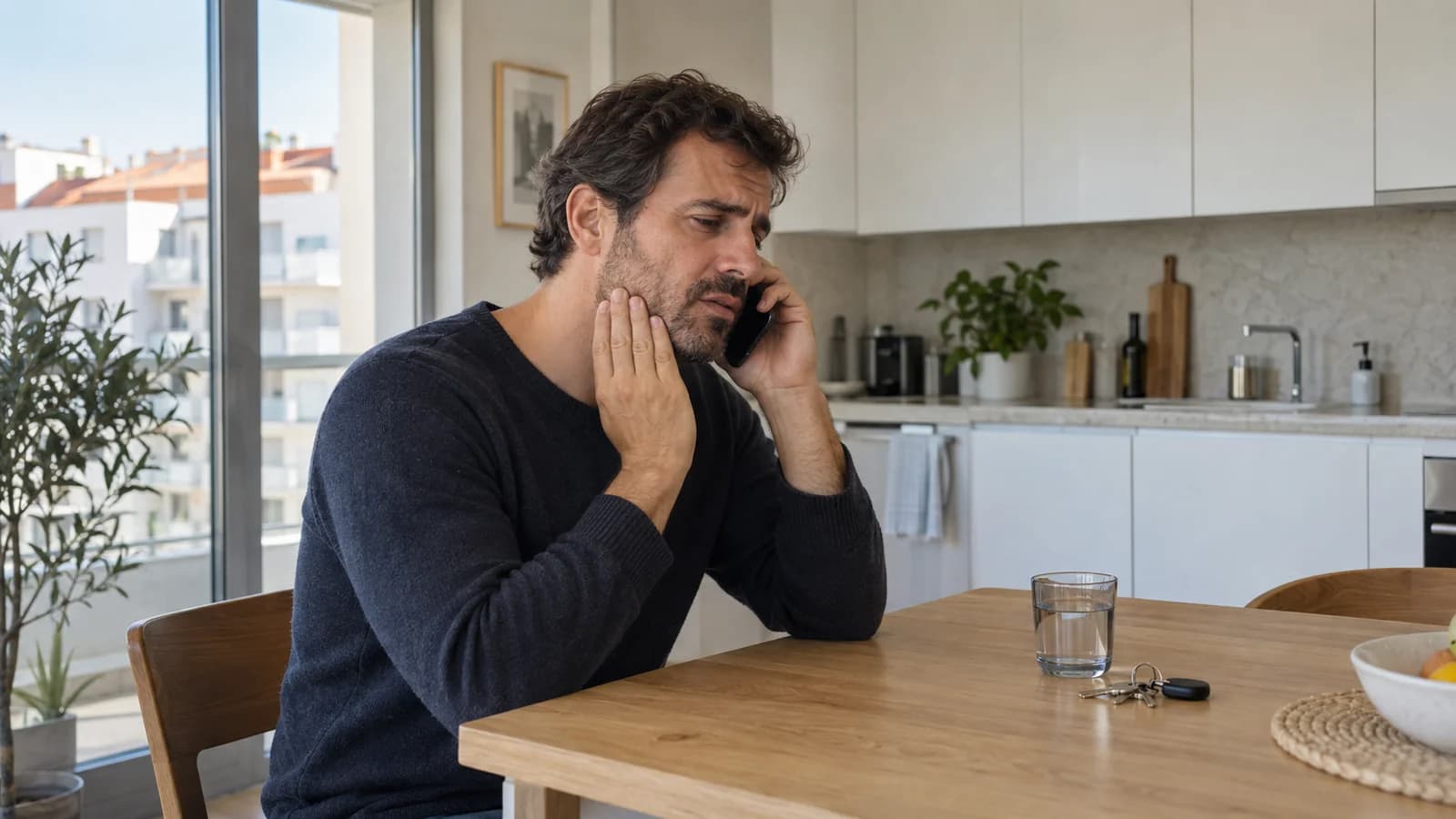
What counts as a dental emergency?
Some situations need advice without delay. Call before coming: we assess urgency by phone and confirm the earliest availability, prioritising:
- Severe pain or pain that keeps you awake — deep decay, an abscess or pulpitis; we relieve the pain first, then deal with the cause.
- Trauma or a broken tooth — falls and sports accidents; the sooner we see you, the better the chances of saving the tooth.
- Swelling, infection or fever — dental infections can worsen quickly; do not wait until the weekend.
- Bleeding that will not stop after an extraction or surgery.
- Braces that are hurting — loose wires, debonded brackets or broken aligners.
- Children in pain — in paediatric dentistry, any pain is a priority and seen with the time needed to put the child at ease.
Contact the clinic for urgent advice. Difficulty breathing, speaking or swallowing, or heavy bleeding that will not stop, needs immediate medical help: call 112.
Find dental emergency contactsBroken or knocked-out tooth: what to do in the first minutes?
With dental trauma, time matters — especially if a permanent tooth has come out whole (avulsion):
- Pick the tooth up by the crown (the white part) and never by the root.
- If it is dirty, rinse it very briefly under water — without scrubbing.
- Keep it in cold milk or saline solution; alternatively, carry it in your own mouth, against the cheek (adults only).
- Seek care immediately — ideally within the first hour.
- If the tooth has only broken, keep the fragment (also in milk) and bring it with you: in many cases it can be bonded back on.
- Note: knocked-out baby teeth are not reimplanted — but the child should still be examined.
I have an abscess or a swollen face: can I wait?
Facial swelling or fever with dental pain needs urgent assessment. If you have difficulty breathing, speaking or swallowing, or substantial spreading swelling, seek immediate medical help through 112 rather than waiting for a dental appointment.
Until you are seen: cold compresses on the outside of the face, an over-the-counter painkiller following the instructions on the packaging, and no heat on the area — heat can speed up the spread of the infection. And do not take antibiotics on your own initiative: the choice and the need for an antibiotic must be assessed clinically.
Where can you be seen urgently in Almada, Seixal or Moita?
During clinic hours, call your nearest Fábrica do Sorriso clinic directly — we answer the phone ourselves, with no call centre, assess the urgency over the phone and book the earliest possible time, usually the same day.
We are in Almada (also serving Cacilhas, Pragal, Cova da Piedade, Feijó and Seixal), Fernão Ferro (Seixal, Corroios, Sesimbra, Quinta do Conde) and Baixa da Banheira (Moita, Barreiro, Alhos Vedros, Vale da Amoreira) — Monday to Saturday, from 10:00 to 13:00 and from 14:00 to 19:00.
Bring identification, your medication list and recent tests if you have them. The appointment aims to ease pain and stabilise the situation; the team explains follow-up care and signs requiring further contact. Some treatments need more than one visit.
What about out of hours or on a Sunday?
During clinic hours, Monday to Saturday, 10:00–13:00 and 14:00–19:00, call Almada, Fernão Ferro or Baixa da Banheira. The team assesses urgency and confirms the earliest availability.
If the situation can wait, call us as soon as we open: emergencies take priority in the day's schedule.
How do you prevent the next emergency?
Most dental emergencies are the end of a story that began months earlier: a small cavity that did not hurt, a gum that bled "only sometimes", a sensitive tooth that was ignored. Routine check-ups and regular professional cleaning detect and resolve these problems before they turn into sleepless nights.
If you play contact sports — or your child does — ask us about a protective mouthguard: it is the simplest way to prevent dental trauma.
The most common questions
- Do you see dental emergencies the same day?
- We prioritise urgent cases. Call before coming: the team assesses urgency by phone and confirms the earliest available appointment. Same-day care depends on the assessment and the schedule.
- How long do I have to reimplant a knocked-out tooth?
- Ideally you should be seen within the first hour — the sooner, the better the tooth's chances of survival. Keep the tooth in cold milk or saline solution, handle it only by the crown and seek care immediately. Baby teeth are not reimplanted, but the child should still be examined.
- What do I do with a dental emergency on a Sunday?
- On Sundays or out of hours, SNS 24 (808 24 24 24) provides triage advice. For difficulty breathing, speaking or swallowing, serious trauma or heavy bleeding that will not stop, call 112. Do not wait for the clinic to open in these situations.
- Does the emergency appointment solve the problem straight away?
- The first aim is to ease pain and stabilise the situation. Definitive treatment may need tests or further visits. Before you leave, the team explains what was done, home care and when to return or seek help.
- Are children with toothache seen as a priority?
- Children in pain are prioritised. Call before coming: the team assesses urgency and confirms the earliest availability, with care adapted to the child’s age and anxiety.

Author: Dr. Carlos Sousa
Last updated October 7, 2026. This article is for information only and does not replace an appointment.