
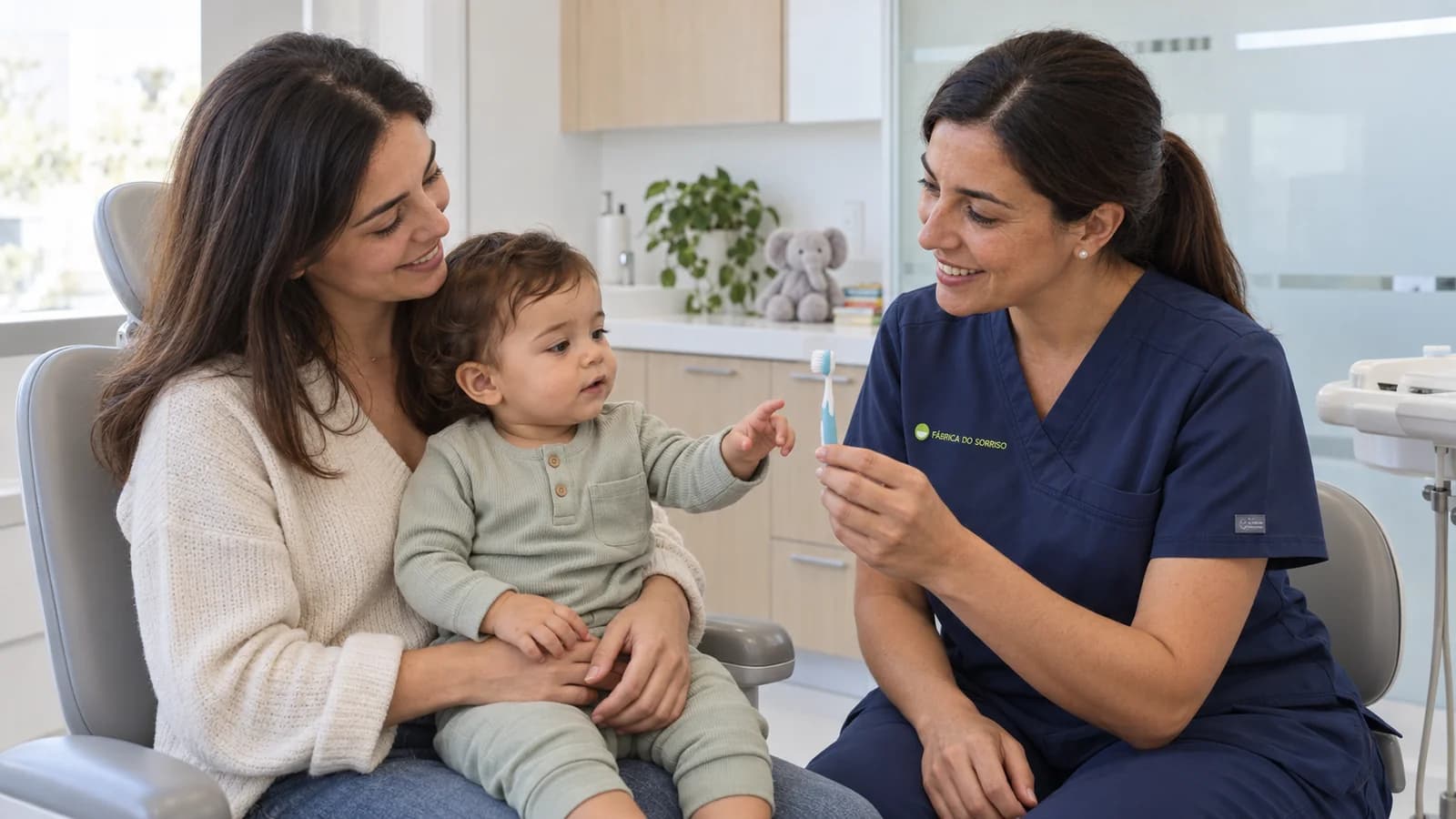
At what age should the first appointment be?
The recommendation is clear: the first visit should take place within 6 months of the first tooth erupting, or by the first year of life — whichever comes first. The first baby teeth usually appear between 6 and 12 months, starting with the lower central incisors.
Does that seem early? The aim of this early appointment is to establish a "dental home" for the child: detecting any changes early, guiding parents on brushing, fluoride, dummies and bottles, and making the practice a familiar place before it is ever a place of treatment.
What happens at the first appointment?
At a first paediatric dentistry appointment there is no rush and no surprises. In around 45 minutes, using language suited to the child's age:
Bring your child’s health information, medication list and dental voucher if one has already been issued. When booking, tell us about your concerns and confirm the appointment fee and applicable cover before visiting.
- We examine the teeth, the gums and the development of the mouth and jaw.
- We assess the risk of tooth decay and habits such as the dummy, thumb-sucking or the night-time bottle.
- We teach (and practise) age-appropriate brushing — including the right amount of fluoride toothpaste.
- We answer parents' questions: diet, fluoride, teething, childhood teeth grinding.
- We let the child explore — sit in the chair, get to know the instruments, count their teeth. Trust is built on this visit.
Baby teeth will fall out — why treat them?
It is the most common question from parents, and the paediatric dentists' answer is emphatic: baby teeth are extremely important. They are what allows the child to chew properly, develop speech, hold the space for the permanent teeth and guide facial development.
Decay in a baby tooth is not "a problem that falls out on its own": it can cause pain and infection, and affect the permanent tooth forming underneath. By age 3, most children already have all 20 baby teeth — and every one deserves the same care as the permanent teeth, which start replacing them at around age 6.
How do you prepare your child for the appointment?
The parents' attitude accounts for a large part of the outcome. What works:
- Talk about the dentist positively and naturally — as something everyone does.
- Avoid words like "pain", "needle", "it won't hurt at all" — and never share your own negative experiences.
- Play dentists at home: counting each other's teeth with a toothbrush is a perfect rehearsal.
- Read a children's book about going to the dentist in the days beforehand.
- Book the appointment for a time when the child is rested — avoid nap time.
- At the practice, let the team take the lead: we are trained to win the child's trust at their own pace.
Sealants, fluoride and check-ups: the prevention calendar
After the first appointment, prevention follows a simple rhythm: regular check-ups (usually every 6 months), reinforcing brushing at home and, when indicated, fluoride application.
When the permanent molars come through — at around age 6 — dental sealants are one of the most effective tools: thin layers of resin applied to the chewing grooves, where the brush struggles to reach, acting as a barrier against decay. Application is quick and painless.
It is also at these appointments that we monitor the development of the bite and identify early any need for interceptive orthodontics — correcting small problems while growth is still on our side.
The cheque-dentista for children: how do you make the most of it?
Between the ages of 2 and 18, many children and young people are entitled to the SNS cheque-dentista, with cover defined by age bracket and largely linked to the school pathway. The voucher covers check-ups and preventive and restorative treatments — including sealants — at no cost to the family.
All three Fábrica do Sorriso clinics take part in the programme: if your child has received a cheque-dentista, simply book the appointment, mention the voucher and bring it on the day, with an identity document. We welcome families from Almada, Seixal, Corroios, Fernão Ferro, Sesimbra, Moita, Barreiro and neighbouring towns, with school-friendly appointment times.
The most common questions
- At what age should a baby first go to the dentist?
- Within 6 months of the first tooth appearing, or at the latest by the first birthday — whichever comes first. This early appointment is there to guide parents and build a positive relationship with the dentist from the start.
- How do I clean a baby's teeth?
- Before the teeth come through, clean the gums with a damp gauze after feeds. With the first teeth, use a soft age-appropriate brush and a tiny amount of fluoride toothpaste — the size of a grain of rice; from age 3, the size of a pea. Brushing should be done or supervised by an adult.
- My child is afraid of the dentist. What do I do?
- Talk about the dentist positively, avoid words like "pain" or "needle", play dentists at home and read children's books on the subject. At the appointment, our paediatric dentistry team leads the visit at the child's pace — without forcing anything — so the experience is calm and even fun.
- Are sealants worth it for my child's teeth?
- Yes, for most children. Sealants protect the grooves of the molars — where the brush struggles to reach — and are proven to prevent decay. They are recommended as soon as the permanent molars erupt, at around age 6, and application is quick and painless. In many cases they are covered by the cheque-dentista.
- Can my child's appointments be paid for with the cheque-dentista?
- If your child has received an SNS cheque-dentista (allocated between the ages of 2 and 18, by age bracket), yes — the check-ups and treatments covered by the voucher cost the family nothing. The Fábrica do Sorriso clinics in Almada, Fernão Ferro and Baixa da Banheira take part in the programme.

Author: Dr. Carlos Sousa
Last updated October 7, 2026. This article is for information only and does not replace an appointment.